Prevent Gun Trafficking
Prevent Gun Trafficking
What does this solve?
Gun trafficking is arming lethal violence around the country. Hundreds of thousands of guns are illegally channeled into communities, where they are used in shootings and other violent crimes.
ATF should work to shut down known trafficking networks and identify dealers who supply these guns through their own negligence or complicity. But particularly in the absence of strict policy guidance and robust enforcement at the federal level, it is critical for states to take action to combat gun trafficking.
Which states give law enforcement tools designed to address crime guns?
29 states have adopted this policy
Tools to Address Crime Guns
Alabama has not adopted this policy
Tools to Address Crime Guns
Alaska has not adopted this policy
Tools to Address Crime Guns
Arizona has adopted this policy
- Does the state require crime guns to be traced?
- No
- Does the state have a trafficking and/or straw purchasing crime?
- Yes
Tools to Address Crime Guns
Arkansas has not adopted this policy
Tools to Address Crime Guns
California has adopted this policy
- Does the state require crime guns to be traced?
- Yes
- Does the state have a trafficking and/or straw purchasing crime?
- Yes
Tools to Address Crime Guns
Colorado has adopted this policy
- Does the state require crime guns to be traced?
- No
- Does the state have a trafficking and/or straw purchasing crime?
- Yes
Tools to Address Crime Guns
Connecticut has adopted this policy
- Does the state require crime guns to be traced?
- Yes
- Does the state have a trafficking and/or straw purchasing crime?
- Yes
Tools to Address Crime Guns
Delaware has adopted this policy
- Does the state require crime guns to be traced?
- Yes
- Does the state have a trafficking and/or straw purchasing crime?
- Yes
Tools to Address Crime Guns
Florida has adopted this policy
- Does the state require crime guns to be traced?
- No
- Does the state have a trafficking and/or straw purchasing crime?
- Yes
Tools to Address Crime Guns
Georgia has adopted this policy
- Does the state require crime guns to be traced?
- No
- Does the state have a trafficking and/or straw purchasing crime?
- Yes
Tools to Address Crime Guns
Hawaii has not adopted this policy
Tools to Address Crime Guns
Idaho has not adopted this policy
Tools to Address Crime Guns
Illinois has adopted this policy
- Does the state require crime guns to be traced?
- Yes
- Does the state have a trafficking and/or straw purchasing crime?
- Yes
Tools to Address Crime Guns
Indiana has adopted this policy
- Does the state require crime guns to be traced?
- No
- Does the state have a trafficking and/or straw purchasing crime?
- Yes
Tools to Address Crime Guns
Iowa has adopted this policy
- Does the state require crime guns to be traced?
- No
- Does the state have a trafficking and/or straw purchasing crime?
- Yes
Tools to Address Crime Guns
Kansas has not adopted this policy
Tools to Address Crime Guns
Kentucky has adopted this policy
- Does the state require crime guns to be traced?
- No
- Does the state have a trafficking and/or straw purchasing crime?
- Yes
Tools to Address Crime Guns
Louisiana has not adopted this policy
Tools to Address Crime Guns
Maine has not adopted this policy
Tools to Address Crime Guns
Maryland has adopted this policy
- Does the state require crime guns to be traced?
- Yes
- Does the state have a trafficking and/or straw purchasing crime?
- Yes
Tools to Address Crime Guns
Massachusetts has adopted this policy
- Does the state require crime guns to be traced?
- Yes
- Does the state have a trafficking and/or straw purchasing crime?
- No
Tools to Address Crime Guns
Michigan has not adopted this policy
Tools to Address Crime Guns
Minnesota has adopted this policy
- Does the state require crime guns to be traced?
- Yes
- Does the state have a trafficking and/or straw purchasing crime?
- Yes
Tools to Address Crime Guns
Mississippi has not adopted this policy
Tools to Address Crime Guns
Missouri has not adopted this policy
Tools to Address Crime Guns
Montana has not adopted this policy
Tools to Address Crime Guns
Nebraska has adopted this policy
- Does the state require crime guns to be traced?
- No
- Does the state have a trafficking and/or straw purchasing crime?
- Yes
Tools to Address Crime Guns
Nevada has adopted this policy
- Does the state require crime guns to be traced?
- No
- Does the state have a trafficking and/or straw purchasing crime?
- Yes
Tools to Address Crime Guns
New Hampshire has not adopted this policy
Tools to Address Crime Guns
New Jersey has adopted this policy
- Does the state require crime guns to be traced?
- Yes
- Does the state have a trafficking and/or straw purchasing crime?
- Yes
Tools to Address Crime Guns
New Mexico has adopted this policy
- Does the state require crime guns to be traced?
- No
- Does the state have a trafficking and/or straw purchasing crime?
- Yes
Tools to Address Crime Guns
New York has adopted this policy
- Does the state require crime guns to be traced?
- Yes
- Does the state have a trafficking and/or straw purchasing crime?
- Yes
Tools to Address Crime Guns
North Carolina has adopted this policy
- Does the state require crime guns to be traced?
- Yes
- Does the state have a trafficking and/or straw purchasing crime?
- No
Tools to Address Crime Guns
North Dakota has not adopted this policy
Tools to Address Crime Guns
Ohio has adopted this policy
- Does the state require crime guns to be traced?
- No
- Does the state have a trafficking and/or straw purchasing crime?
- Yes
Tools to Address Crime Guns
Oklahoma has not adopted this policy
Tools to Address Crime Guns
Oregon has adopted this policy
- Does the state require crime guns to be traced?
- Yes
- Does the state have a trafficking and/or straw purchasing crime?
- No
Tools to Address Crime Guns
Pennsylvania has adopted this policy
- Does the state require crime guns to be traced?
- Yes
- Does the state have a trafficking and/or straw purchasing crime?
- Yes
Tools to Address Crime Guns
Rhode Island has adopted this policy
- Does the state require crime guns to be traced?
- Yes
- Does the state have a trafficking and/or straw purchasing crime?
- Yes
Tools to Address Crime Guns
South Carolina has not adopted this policy
Tools to Address Crime Guns
South Dakota has not adopted this policy
Tools to Address Crime Guns
Tennessee has not adopted this policy
Tools to Address Crime Guns
Texas has adopted this policy
- Does the state require crime guns to be traced?
- No
- Does the state have a trafficking and/or straw purchasing crime?
- Yes
Tools to Address Crime Guns
Utah has adopted this policy
- Does the state require crime guns to be traced?
- No
- Does the state have a trafficking and/or straw purchasing crime?
- Yes
Tools to Address Crime Guns
Vermont has adopted this policy
- Does the state require crime guns to be traced?
- No
- Does the state have a trafficking and/or straw purchasing crime?
- Yes
Tools to Address Crime Guns
Virginia has adopted this policy
- Does the state require crime guns to be traced?
- Yes
- Does the state have a trafficking and/or straw purchasing crime?
- Yes
Tools to Address Crime Guns
Washington has not adopted this policy
Tools to Address Crime Guns
West Virginia has not adopted this policy
Tools to Address Crime Guns
Wisconsin has adopted this policy
- Does the state require crime guns to be traced?
- No
- Does the state have a trafficking and/or straw purchasing crime?
- Yes
Tools to Address Crime Guns
Wyoming has not adopted this policy
How it Works
State leaders can take action to address gun trafficking and fill the void left in the absence of strict policy guidance and robust enforcement at the federal level.
For decades, state and local law enforcement have relied on ATF as the nation’s lead agency in protecting communities from firearm trafficking and reducing gun violence. Even though ATF has been underfunded for decades,1Chelsea Parsons, Eugenio Weigend Vargas, and Rukmani Bhatia, “Rethinking ATF’s Budget to Prioritize Effective Gun Violence,” Center for American Progress, September 17, 2020, https://www.americanprogress.org/article/rethinking-atfs-budget-prioritize-effective-gun-violence-prevention/. it has consistently helped identify and dismantle gun trafficking networks. In recent years, ATF made significant progress in addressing gun traffickers and the dealers that supply them by instating a 2021 policy under which ATF would revoke licenses of gun dealers who willfully violate certain federal laws,2Biden-Harris White House, “Fact Sheet: Biden-Harris Administration Announces Comprehensive Strategy to Prevent and Respond to Gun Crime and Ensure Public Safety,” June 23, 2021, https://bidenwhitehouse.archives.gov/briefing-room/statements-releases/2021/06/23/fact-sheet-biden-harris-administration-announces-comprehensive-strategy-to-prevent-and-respond-to-gun-crime-and-ensure-public-safety/; ATF, “Enhanced Regulatory Enforcement Policy,” accessed January 17, 2025, https://web.archive.org/web/20250117171012/https://www.atf.gov/rules-and-regulations/enhanced-regulatory-enforcement-policy. and implementing an intelligence-driven approach to gun dealer inspections and trafficking investigations.
However, in 2025, the mission of ATF was drastically undercut, with its resources shifted away from firearm trafficking and violent crime. Approximately 80 percent of the 2,500 ATF Special Agents who are specifically trained to investigate firearms trafficking have been reassigned to immigration enforcement duties,3Bob Ortega and Allison Gordon, “Gun Crime Cases Fall as Agents Shift to Immigration Crackdown,” CNN, October 15, 2025, https://www.cnn.com/2025/10/15/us/trump-immigration-atf-gun-cases-invs. and the successful 2021 “zero tolerance” policy was also reversed.4ATF, “DOJ, ATF Repeal FFL Inspection Policy and Begin Review of Two Final Rules,” press release, April 7, 2025, https://www.atf.gov/news/press-releases/doj-atf-repeal-ffl-inspection-policy-and-begin-review-two-final-rules; ATF, “Enhanced Regulatory Enforcement Policy,” April 8, 2025, https://www.atf.gov/rules-and-regulations/enhanced-regulatory-enforcement-policy.
With the federal government pulling back from efforts to identify and interrupt trafficking activity and hold traffickers accountable,5ATF, “Protecting Second Amendment Rights,” May 21, 2025, https://www.atf.gov/firearms/protecting-second-amendment-rights. state and local leaders can help combat trafficking by utilizing a comprehensive strategy that includes:
- Using data to identify and interrupt trafficking: States and local law enforcement should collect data through comprehensive crime gun tracing and ballistic evidence to help identify gun trafficking activity and patterns.
- Implementing robust regulatory oversight of gun dealers: States should enact laws requiring gun dealers to obtain a state license, implement security measures to prevent theft, send sale records to state officials for retention, and conduct annual background checks and training for dealers and their employees, as well as authorizing regular inspections of gun dealers by state or local officials and authorizing disciplinary action against dealers who violate the law.6Everytown for Gun Safety, “The Life-Saving Promise of State Gun Dealer Licensing.” April 17, 2025.
- Enacting foundational gun safety laws that deter trafficking: States should enact laws requiring background checks on all gun sales, creating a waiting period before a gun sale can be completed, limiting the number of guns an individual can purchase per month, and allowing for the prosecution of straw purchasing and trafficking.
By the numbers
1.27M
By the end of 2026, an estimated 1.27 million guns will have been illegally trafficked since 2017.
64%
Intrastate gun trafficking was 64 percent lower in places with strong gun dealer regulations and oversight.
10x
States with the highest number of gun dealers per capita have 10 times higher rates of guns trafficked to another state and subsequently used in a crime.
3/4
Nearly three-quarters of trafficked guns are recovered in crimes in the same state where they were purchased.
Myth & Fact
Myth
Gun traffickers operate in the shadows, stealing guns from unsuspecting gun dealers and trafficking them abroad.
Fact
Gun dealers play a key role in gun trafficking. The vast majority of guns that end up trafficked begin as part of the inventory of a licensed gun dealer.1The only crime guns that do not originate from a gun dealer are privately made firearms (PMF), also known as “ghost guns.” According to ATF trace data, between 2017 and 2023, 92,702 PMFs were recovered by law enforcement and submitted to ATF for tracing. Comparatively, PMFs represent just 4 percent of all crime guns recovered and traced during this period. ATF, “National Firearms Commerce and Trafficking Assessment (NFTCA), Volume IV: Protecting America From Trafficked Firearms—Part V: PMF Updates and New Analysis,” January 2025, 5, https://www.atf.gov/firearms/docs/report/nfcta-volume-iv-part-v-%E2%80%93-pmf-updates-and-new-analysis/download. The top two trafficking methods are straw purchasing and unlicensed dealing, which both involve illegal purchases from a licensed gun dealer and account for more than half of all trafficked firearms.2ATF, “National Firearms Commerce and Trafficking Assessment (NFTCA), Volume III: Firearms Trafficking Investigations—Part III: Firearm Trafficking Channels and Methods Used,” April 2024, 2, https://www.atf.gov/firearms/docs/report/nfcta-volume-iii-part-iii/download. See Table FTC-02: “Total Number and Percentage of Cases by Firearm Trafficking Channel Types, 2017–2021.” When dealers fail to recognize or ignore the telltale signs of suspicious purchases that indicate trafficking, they become suppliers of trafficked guns—prioritizing profit over safety. In addition, most trafficked guns don’t travel far—nearly three-quarters of trafficked guns are recovered in crimes in the same state where they were purchased.3ATF, “National Firearms Commerce and Trafficking Assessment (NFTCA), Volume II: Crime Guns—Part III: Crime Guns Recovered and Traced within the United States and Its Territories,” February 2023, 38, https://www.atf.gov/firearms/docs/report/nfcta-volume-ii-part-iii-crime-guns-recovered-and-traced-us/download. See Figure GP-03.
Featured Resources

The Supply Side of Violence: How Gun Dealers Fuel Firearm Trafficking
Examining the scale of firearm trafficking in the U.S., how gun dealers fuel it, and a roadmap for state action to help protect communities.

Five Things to Know About Crime Guns, Gun Trafficking, and Background Checks
The current patchwork of state laws makes it easy for individuals to traffic firearms from states with weaker gun laws.

Who is Manufacturing the Guns Used in Crimes?
The same manufacturers who are engaging in risky business practices to profit the most from gun sales are also behind the most gun crimes.
Printing Violence: Urgent Policy Actions Are Needed to Combat 3D-Printed Guns
Policymakers, technology firms, and civil society must act urgently to address the dangers of 3D-printed firearms (3DPFs).
Inside the Gun Shop: Firearms Dealers and Their Impact
This report spells out the basic facts about licensed dealers and the relationship between these dealers and gun crimes.
The Smoking Gun
An online resource committed to exposing the gun industry’s role in our gun violence epidemic today.
All Resources
Prevent Gun Trafficking
All Resources
Gun Trafficking and Crime Guns in Colorado
Colorado is facing a crime gun crisis—and the evidence points squarely at the state’s own federally licensed gun dealers.
Fact SheetGun Trafficking and Crime Guns in Maryland
Maryland is facing a crime gun crisis—and the evidence points squarely at the state’s own federally licensed gun dealers.
Fact SheetGun Trafficking and Crime Guns in Georgia
Georgia is facing a crime gun crisis—and the evidence points squarely at the state’s own federally licensed gun dealers.
Fact SheetGun Trafficking and Crime Guns in Minnesota
Minnesota is facing a crime gun crisis—and the evidence points squarely at the state’s own federally licensed gun dealers.
Fact SheetGun Trafficking and Crime Guns in North Carolina
North Carolina is facing a crime gun crisis—and the evidence points squarely at the state’s own federally licensed gun dealers.
Fact SheetGun Trafficking and Crime Guns in Pennsylvania
Pennsylvania is facing a crime gun crisis—and the evidence points squarely at the commonwealth’s own federally licensed gun dealers.
Fact SheetGun Trafficking and Crime Guns in Washington
Washington is facing a crime gun crisis—and the evidence points squarely at the state’s own federally licensed gun dealers.
Fact SheetGun Trafficking and Crime Guns in Maine
Maine is facing a crime gun crisis—and the evidence points squarely at the state’s own federally licensed gun dealers.
Fact SheetGun Trafficking and Crime Guns in Virginia
Virginia is facing a crime gun crisis—and the evidence points squarely at the commonwealth’s own federally licensed gun dealers.
Fact SheetGun Trafficking and Crime Guns in Oregon
Oregon is facing a crime gun crisis—and the evidence points squarely at the state's own federally licensed gun dealers.
Fact SheetGun Trafficking in Your State
Gun trafficking is arming lethal violence around the country. Every year, hundreds of thousands of guns are illegally channeled into communities, where they are used…
Fact SheetArizona Firearms Trafficking and Crime Gun Fact Sheet
Arizona is facing a crime gun crisis—and the evidence points squarely at the state’s own federally licensed gun dealers.
Fact SheetWisconsin Firearms Trafficking and Crime Gun Fact Sheet
Wisconsin is facing a crime gun crisis—and the evidence points squarely at the state’s own federally licensed gun dealers.
Fact SheetMichigan Firearms Trafficking and Crime Gun Fact Sheet
Michigan is facing a crime gun crisis—and the evidence points squarely at the state’s own federally licensed gun dealers.
Fact SheetNew Mexico Firearms Trafficking and Crime Gun Fact Sheet
New Mexico is facing a crime gun crisis—and the evidence points squarely at the state’s own federally licensed gun dealers.
Fact SheetAppendix 3: Methodology to Calculate Annual Revenue of Trafficked Crime Guns
While the percentage of crime guns relative to firearm sales is small, the overall number of crime guns is itself staggering.
AppendixAppendix 2: Crime Gun Intelligence Firearm Trafficking Indicators
What is Crime Gun Intelligence? Crime Gun Intelligence (CGI) is primarily trace data associated with crime guns recovered in a particular jurisdiction. When available, CGI…
AppendixAppendix 1: Understanding Crime Gun Tracing to Prevent Gun Violence
How are firearms traced? Crime gun tracing is an important tool for law enforcement to trace the lawful chain of custody of a firearm in…
AppendixDamming the Iron River
In November 2019, an armored convoy of heavily armed gunmen working for the Cartel del Noreste attacked the town of Villa Union, Mexico, shooting at…
Report
Ghost Guns Recoveries and Shootings
Everytown Research & Policy has collected examples of reported murders and shootings using ghost guns since 2013.
Data Tracker
Robos de armas en vehículos: la fuente más grande de armas robadas
Una investigación de Everytown for Gun Safety Support Fund revela que los robos de armas en vehículos son la mayor fuente de armas robadas.
Everytown Research & Policy
Guide to Secure Gun Storage Devices
Secure gun storage can prevent theft and access by children, unauthorized users, and anyone who may pose a danger to themself or others.
Report
Update Background Check Laws
Updating federal and state laws to require background checks on all gun sales is a common-sense way to keep guns out of the wrong hands.
Fact Sheet
City Gun Violence Reduction Insight Portal
CityGRIP is an online clearinghouse of data-informed gun violence reduction strategies.
Data Tracker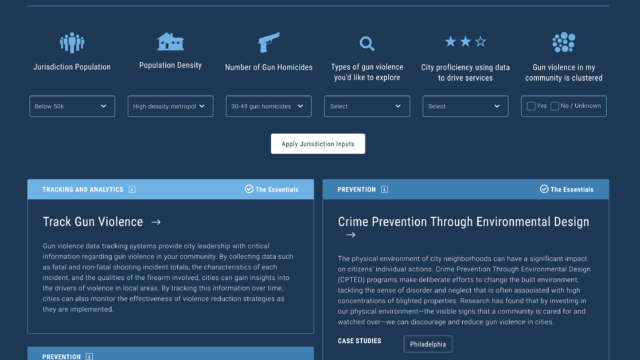
Stolen Guns Pose a Tremendous Risk to Public Safety
Thousands of guns are stolen every year and often wind up at crime scenes. Stolen guns pose a tremendous risk to public safety.
Fact Sheet
State Firearm Preemption Laws
State firearm preemption laws are a relatively recent phenomenon inconsistent with centuries of American history in which cities and rural areas had different gun laws.
Fact SheetBusiness As Usual
Americans suffer from an extraordinary rate of gun violence, 20 times higher than nations with comparable levels of economic development.1…
Report