
Trafficking of Guns
Trafficking of Guns
What is the problem?
Gun trafficking is a significant problem and leads to hundreds of thousands of illegal guns being channeled into communities around the country. By the end of 2026, Everytown estimates that 1.27 million guns will have been illegally trafficked since 2017.1Nick Suplina, Marianna Mitchem, Chelsea Parsons, “The Supply Side of Violence: How Gun Dealers Fuel Firearm Trafficking,” Everytown for Gun Safety Support Fund, December 2, 2025, https://everytownresearch.org/report/how-gun-dealers-fuel-firearm-trafficking/.
Gun trafficking is not just a problem of the individuals who move guns from legal commerce to illegal use. It’s also a problem of the gun dealers who supply these guns through their own negligence or complicity. The vast majority of guns that end up trafficked begin as part of the inventory of a licensed gun dealer.1The only crime guns that do not originate from a gun dealer are privately made firearms (PMF), also known as “ghost guns.” According to ATF trace data, between 2017 and 2023, 92,702 PMFs were recovered by law enforcement and submitted to ATF for tracing. Comparatively, PMFs represent just 4 percent of all crime guns recovered and traced during this period. ATF, “National Firearms Commerce and Trafficking Assessment (NFTCA), Volume IV: Protecting America From Trafficked Firearms—Part V: PMF Updates and New Analysis,” January 2025, 5, https://www.atf.gov/firearms/docs/report/nfcta-volume-iv-part-v-%E2%80%93-pmf-updates-and-new-analysis/download. The top two trafficking methods are straw purchasing and unlicensed dealing, which both involve illegal sales from a licensed gun dealer and account for more than half of all trafficked firearms.2ATF, “National Firearms Commerce and Trafficking Assessment (NFTCA), Volume III: Firearms Trafficking Investigations—Part III: Firearm Trafficking Channels and Methods Used,” April 2024, 2, https://www.atf.gov/firearms/docs/report/nfcta-volume-iii-part-iii/download. See Table FTC-02: “Total Number and Percentage of Cases by Firearm Trafficking Channel Types, 2017–2021.” When dealers fail to recognize the telltale signs of suspicious sales that indicate trafficking, they become suppliers of trafficked guns—prioritizing profit over safety.
Why is it an issue?
Gun trafficking fuels community violence.
Data show trafficked guns are used to arm individuals who cannot legally purchase guns and are used in twice as many shootings as guns that are not trafficked.1ATF, “National Firearms Commerce and Trafficking Assessment (NFTCA), Volume III: Firearms Trafficking Investigations—Part IX: Investigation Outcomes,” April 2024, 5, https://www.atf.gov/firearms/docs/report/nfcta-volume-iii-part-ix/download; ATF, “National Firearms Commerce and Trafficking Assessment (NFTCA), Volume IV: Protecting America from Trafficked Firearms—Part IV: Firearm Trafficking Investigations,” January 2025, 19, https://www.atf.gov/firearms/docs/report/nfcta-volume-iv-part-iv-%E2%80%93-firearm-trafficking-investigations/download. Nearly 28 percent of trafficked firearms were used in furtherance of a drug offense or drug trafficking, 19 percent were used in aggravated assaults, 11 percent were used in homicides, and 9 percent were used in attempted homicides.2There can be multiple crimes identified in a firearm trafficking investigation, so these statistics are not mutually exclusive. ATF, “National Firearms Commerce and Trafficking Assessment (NFTCA), Volume III: Firearms Trafficking Investigations—Part IX: Investigation Outcomes,” April 2024, 4, https://www.atf.gov/firearms/docs/report/nfcta-volume-iii-part-ix/download. See Figure IO-03: “Top Ten Crimes Identified, 2017–2021.”
By the numbers
1.27M
By the end of 2026, an estimated 1.27 million guns will have been illegally trafficked since 2017.
$695M
Trafficked firearms are big business. Everytown estimates that between 2017 and 2023, gun dealers earned approximately $695 million from sales of trafficked firearms.
74%
74 percent of traced guns that crossed state lines came from states without background check laws.
78%
78 percent of traced guns with a short time-to-crime that crossed state lines came from states without background check laws.
What are the solutions?
-
Prevent Gun Trafficking
Gun trafficking is arming lethal violence around the country. Hundreds of thousands of guns are illegally channeled into communities, where they are used in shootings and other violent crimes.
-
Gun Dealer Reform
Laws on how gun stores conduct their business have not been strengthened since the 1960s. Congress should pass comprehensive gun dealer reform.
-
Repeal Restrictions on Gun Trace Data
First enacted by Congress in 2003 as a rider to an appropriations bill, the Tiahrt Rider has restricted public access to data about gun crime and firearm trafficking.
-
Smart Guns and Gun Safety Features
A personalized—or “smart”—gun is a firearm that employs authorized-use technology, like the thumb scan or passcode available on many smartphones, to turn stolen guns and guns accessed by children into harmless pieces of steel. If widely implemented, it would be a game-changer for keeping guns out of the hands of children and criminals.
-
Stop the Spread of 3D-Printed Guns
We need stronger policies, targeted interventions, and action from 3D-printing companies to combat the dangers of 3D-printed firearms.
-
Report Lost and Stolen Guns
Hundreds of thousands of guns are lost or stolen from private gun owners, gun dealers, or shipping companies every year. Requiring that lost and stolen guns be reported to law enforcement deters illegal gun trafficking. The reporting of these guns allows the police to respond more quickly to gun thefts and helps them identify tracking patterns.
-
Secure Gun Storage
Gun owners can make their homes and communities safer by storing their guns securely. This means storing them unloaded, locked, and separate from ammunition.
-
Background Checks on All Gun Sales
Background checks are the foundation of any comprehensive gun violence prevention strategy. Current federal law requires that background checks be conducted whenever a person attempts to buy a gun from a licensed gun dealer. This is to ensure that the buyer is not legally prohibited from having the gun. Since federal law began requiring these background checks in 1994, background checks have blocked millions of sales to people with felony convictions or other prohibiting histories.1Everytown Research analysis of Connor Brooks, “Background Checks for Firearm Transfers, 2019–2020,” US Bureau of Justice Statistics, November 2023, https://bjs.ojp.gov/document/bcft1920.pdf, and data obtained by FBI FOIA requests, 2021–2024. Though the majority of the transactions and denials reported by the FBI and BJS are associated with a firearm sale or transfer, a small number may be for concealed-carry permits and other reasons not related to a sale or transfer.
Featured Resources

The Supply Side of Violence: How Gun Dealers Fuel Firearm Trafficking
Examining the scale of firearm trafficking in the U.S., how gun dealers fuel it, and a roadmap for state action to help protect communities.

Who is Manufacturing the Guns Used in Crimes?
The same manufacturers who are engaging in risky business practices to profit the most from gun sales are also behind the most gun crimes.

Five Things to Know About Crime Guns, Gun Trafficking, and Background Checks
The current patchwork of state laws makes it easy for individuals to traffic firearms from states with weaker gun laws.
Inside the Gun Shop: Firearms Dealers and Their Impact
This report spells out the basic facts about licensed dealers and the relationship between these dealers and gun crimes.
Printing Violence: Urgent Policy Actions Are Needed to Combat 3D-Printed Guns
Policymakers, technology firms, and civil society must act urgently to address the dangers of 3D-printed firearms (3DPFs).
The Smoking Gun
An online resource committed to exposing the gun industry’s role in our gun violence epidemic today.
All Resources
Trafficking of Guns
All Resources
Gun Trafficking and Crime Guns in New Jersey
New Jersey is facing a crime gun crisis—and the evidence points primarily at federally licensed gun dealers operating in other states.
Fact SheetGun Trafficking and Crime Guns in Nevada
Nevada is facing a crime gun crisis—and the evidence points squarely at the state’s own federally licensed gun dealers.
Fact SheetGun Trafficking and Crime Guns in Connecticut
Connecticut is facing a crime gun crisis—and the evidence points squarely at the state’s own federally licensed gun dealers.
Fact SheetGun Trafficking and Crime Guns in Illinois
Illinois is facing a crime gun crisis—and the evidence points squarely at the state’s own federally licensed gun dealers.
Fact SheetGun Trafficking and Crime Guns in Delaware
Delaware is facing a crime gun crisis—and the evidence points squarely at the state’s own federally licensed gun dealers.
Fact SheetGun Trafficking and Crime Guns in South Carolina
South Carolina is facing a crime gun crisis—and the evidence points squarely at the state’s own federally licensed gun dealers.
Fact SheetGun Trafficking and Crime Guns in California
California is facing a crime gun crisis—and the evidence points to the state’s own federally licensed gun dealers.
Fact SheetGun Trafficking and Crime Guns in Colorado
Colorado is facing a crime gun crisis—and the evidence points squarely at the state’s own federally licensed gun dealers.
Fact SheetGun Trafficking and Crime Guns in Maryland
Maryland is facing a crime gun crisis—and the evidence points squarely at the state’s own federally licensed gun dealers.
Fact SheetGun Trafficking and Crime Guns in Georgia
Georgia is facing a crime gun crisis—and the evidence points squarely at the state’s own federally licensed gun dealers.
Fact SheetGun Trafficking and Crime Guns in Minnesota
Minnesota is facing a crime gun crisis—and the evidence points squarely at the state’s own federally licensed gun dealers.
Fact SheetGun Trafficking and Crime Guns in North Carolina
North Carolina is facing a crime gun crisis—and the evidence points squarely at the state’s own federally licensed gun dealers.
Fact SheetGun Trafficking and Crime Guns in Pennsylvania
Pennsylvania is facing a crime gun crisis—and the evidence points squarely at the commonwealth’s own federally licensed gun dealers.
Fact SheetGun Trafficking and Crime Guns in Washington
Washington is facing a crime gun crisis—and the evidence points squarely at the state’s own federally licensed gun dealers.
Fact SheetGun Trafficking and Crime Guns in Maine
Maine is facing a crime gun crisis—and the evidence points squarely at the state’s own federally licensed gun dealers.
Fact SheetGun Trafficking and Crime Guns in Virginia
Virginia is facing a crime gun crisis—and the evidence points squarely at the commonwealth’s own federally licensed gun dealers.
Fact SheetGun Trafficking and Crime Guns in Oregon
Oregon is facing a crime gun crisis—and the evidence points squarely at the state's own federally licensed gun dealers.
Fact SheetGun Trafficking in Your State
Gun trafficking is arming lethal violence around the country. Every year, hundreds of thousands of guns are illegally channeled into communities, where they are used…
Fact SheetArizona Firearms Trafficking and Crime Gun Fact Sheet
Arizona is facing a crime gun crisis—and the evidence points squarely at the state’s own federally licensed gun dealers.
Fact SheetMichigan Firearms Trafficking and Crime Gun Fact Sheet
Michigan is facing a crime gun crisis—and the evidence points squarely at the state’s own federally licensed gun dealers.
Fact SheetWisconsin Firearms Trafficking and Crime Gun Fact Sheet
Wisconsin is facing a crime gun crisis—and the evidence points squarely at the state’s own federally licensed gun dealers.
Fact SheetNew Mexico Firearms Trafficking and Crime Gun Fact Sheet
New Mexico is facing a crime gun crisis—and the evidence points squarely at the state’s own federally licensed gun dealers.
Fact SheetAppendix 3: Methodology to Calculate Annual Revenue of Trafficked Crime Guns
While the percentage of crime guns relative to firearm sales is small, the overall number of crime guns is itself staggering.
AppendixAppendix 2: Crime Gun Intelligence Firearm Trafficking Indicators
What is Crime Gun Intelligence? Crime Gun Intelligence (CGI) is primarily trace data associated with crime guns recovered in a particular jurisdiction. When available, CGI…
AppendixAppendix 1: Understanding Crime Gun Tracing to Prevent Gun Violence
How are firearms traced? Crime gun tracing is an important tool for law enforcement to trace the lawful chain of custody of a firearm in…
AppendixDamming the Iron River
In November 2019, an armored convoy of heavily armed gunmen working for the Cartel del Noreste attacked the town of Villa Union, Mexico, shooting at…
Report
Robos de armas en vehículos: la fuente más grande de armas robadas
Una investigación de Everytown for Gun Safety Support Fund revela que los robos de armas en vehículos son la mayor fuente de armas robadas.
Everytown Research & Policy
Update Background Check Laws
Updating federal and state laws to require background checks on all gun sales is a common-sense way to keep guns out of the wrong hands.
Fact Sheet
City Gun Violence Reduction Insight Portal
CityGRIP is an online clearinghouse of data-informed gun violence reduction strategies.
Data Tracker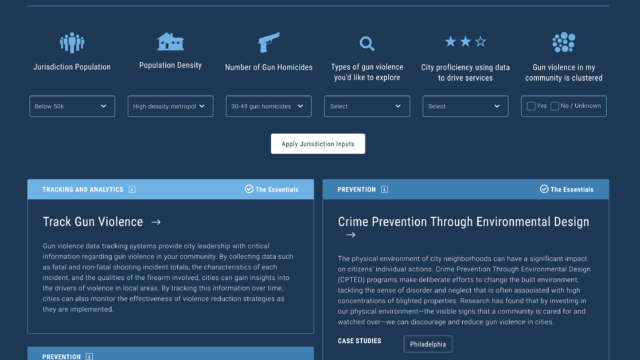
Stolen Guns Pose a Tremendous Risk to Public Safety
Thousands of guns are stolen every year and often wind up at crime scenes. Stolen guns pose a tremendous risk to public safety.
Fact Sheet